Are you a researcher looking for reputable sources on the Nakba? Our guide has sources for a diverse set of researchers—from students looking for secondary sources like peer-reviewed academic journals, to journalists seeking reliable databases, to specialists producing knowledge in academia or in the information space, and more.
Academic Journals
Note for students: our guide features two types of peer-reviewed journals: those that require an individual subscription or access via your institution, and open-access journals.
Open-access journals are accessible to all researchers, free of charge.
For access to paywalled journals, check to see if your university subscribes to the journal you are interested in, which will grant you physical and/or digital access. If your university does not provide institutional access to any of the journals listed below, here are some options that might be available to you:
- Submit a request to your librarian to acquire institutional access, or to purchase access to a particular issue of the journal you are interested in.
- Submit a scan-and-deliver request for the particular article you would like to read. Some universities have resource sharing agreements with one another and will fulfill requests for article scans, as well as scans of book chapters (limits apply due to copyright laws; consult your library policy guidelines).
- Occasionally, paywalled journals will offer free access to selected articles in a particular issue, or free access to selected issues.
Note that university librarians often consider requests from library patrons to acquire institutional access to books and academic journals.
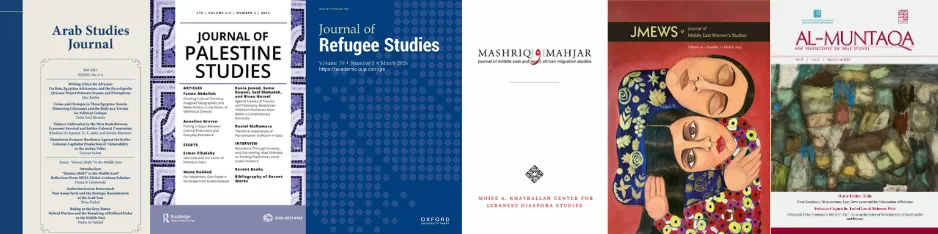
Arab Studies Journal (ASJ)
Peer-reviewed academic journal published by the Arab Studies Institute (ASI), the parent organization to other initiatives including the Jadaliyya e-zine. ASJ is affiliated with Georgetown University’s Center for Contemporary Arab Studies (CCAS). Subscription/institutional access required.
Arab Studies Quarterly (ASQ)
Peer-reviewed academic journal co-founded by Palestinian American intellectuals Edward Said and Ibrahim Abu-Lughod in 1979. The establishment of ASQ emerged from a need to challenge pervasive orientalism and (largely unchecked) anti-Arab bigotry in US academic publications. ASQ was established by the Association of Arab American University Graduates (AAUG), a grassroots political organization that operated from 1967 to 2007 and was dedicated to promoting decolonization in the Arab world, global anti-imperialist solidarity, and Palestinian liberation. Subscription/institutional access required for issues published between 1979 and –2007; open access for all issues published since 2008.
International Journal of Middle East Studies (IJMES)
Peer-reviewed journal of the Middle East Studies Association (MESA), a leading professional association for scholars and experts on the region. Subscription/institutional access required.
Peer-reviewed journal of the Institute for Palestine Studies (IPS), a research organization established in 1963 that also publishes the Journal of Palestine Studies and Majallat al-Dirasat al-Filastiniyya (Arabic). Jerusalem Quarterly regularly publishes scholarship on the ethnic cleansing of Jerusalem, and Jerusalem in the Palestinian Nakba. Subscription/institutional access required.
Journal of Middle East Women’s Studies
Peer-reviewed, interdisciplinary journal of the Association for Middle East Women’s Studies, which has published scholarship on Palestinian women and the (ongoing) Nakba. Subscription/institutional access required.
Peer-reviewed journal of the Institute for Palestine Studies (IPS), a research organization established in 1963 that also publishes academic journals Majallat al-Dirasat al-Filastiniyya (Arabic) and Jerusalem Quarterly. Subscription/institutional access required.
Peer-reviewed, interdisciplinary journal on forced migration globally, which has published research on various dimensions of the Palestinians’ refugeehood as a result of their forced expulsion, starting with the Nakba. Subscription/institutional access required.
Mashriq and Mahjar: Journal of Middle East and North African Migration Studies
Peer-reviewed journal of the Moise A. Khayrallah Center for Lebanese Diaspora Studies at North Carolina State University. Useful resource for academic publications on Arab Americans and Palestinian Americans. Open access.
Peer-reviewed journal that promotes interdisciplinary approaches to the study of the region with a commitment to “heterodox theoretical perspectives” to advance knowledge production on the region. Open access.
Al-Muntaqa: New Perspectives on Arab Studies
Peer-reviewed journal of the Arab Center for Research and Policy Studies (ACRPS) and the Doha Institute for Graduate Studies. Open access.
Relevant Academic Centers, Initiatives, and Research Organizations
For expert analysis, access to reports, announcements on new publications in the field of Palestine studies, research guides, finding aids, methodological primers, and informative digital projects, visit the sites of the following organizations:
- Arab Center for Research and Policy Studies (ACRPS)
- Arab Center Washington DC (ACW)
- Arab and Muslim Ethnicities and Diasporas Studies (AMED), San Francisco State University
- BADIL Resource Center for Palestinian Residency and Refugee Rights
- Center for Palestine Studies (CPS), Columbia University
- Institute for Palestine Studies (IPS)
- Librarians and Archivists with Palestine
- Learn the Palestinian Revolution
- Middle East Studies Association (MESA)
- New Directions in Palestinian Studies, Brown University
- Palestine Land Society
- Palestinian American Research Center (PARC)
- Palestine and Arabic Studies Program, Birzeit University
- Palestinian and Arab Studies Program, University of California, Berkeley
- Zochrot
Databases and Digital Resources
The following databases and digital resources contain information that is relevant to a diverse set of researchers including students, scholars, journalists, and policy analysts. These include sources relevant for both historical and contemporary studies.
Digitized collection of al-Majdal, a magazine produced by BADIL Resource Center for Palestinian Residency and Refugee Rights on various aspects of the Palestinian refugee struggle and its political dimensions.
Collection of data produced by the UN Office for the Coordination of Humanitarian Affairs to assist humanitarian aid organizations as they carry out their work. Resources on the ongoing Nakba include “Data on demolition and displacement in the West Bank,” a useful resource to follow Palestinian dispossession in the face of continued Israeli expansionism, and its regular “Humanitarian Situation Updates” for the West Bank in light of settlement expansion and displacement, and for Gaza, where Palestinians are being displaced repeatedly in light of Israel’s genocidal policies.
Dreams of a Nation, Columbia University Center for Palestine Studies (CPS)
Database of Palestinian films, many of which deal directly with the Nakba and its ongoing consequences, reflections on exile, refugeehood, and the right of return. This database provides synopses of dozens of Palestinian films, initially compiled by Columbia University Professor Hamid Dabashi. The project also gave rise to Dabashi's edited volume, Dreams of a Nation: On Palestinian Cinema, which analyzes major themes in Palestinian film. Films featured in this database are archived in the Columbia University library.
Multifaceted project that offers a “big picture” introduction to Jerusalem, its history, and current issues. Features biographies of prominent Jerusalemites, factsheets, graphics, interactive maps, analysis, essays, timelines, information on Jerusalem’s legal status, and more. Includes resources on Jerusalem in the Nakba, and the long process of ethnic cleansing that began with the 1948 Nakba, followed by the 1967 Naksa (setback), and continues through the present day.
New Directions in Palestinian Studies (Book Series)
Open access book series that publishes innovative academic research on Palestine. Texts deal with themes related to the ongoing Nakba, exile, refugeehood, and political fragmentation, including Adel Manna's Nakba and Survival: The Story of Palestinians Who Remained in Haifa and the Galilee, 1948-1956. Joint endeavor of University of California Press and New Directions in Palestinian Studies Initiative at Brown University's Center for Middle East Studies.
Bibliography of Palestinian village histories, a genre of historical writing typically produced by Nakba survivors or their descendants on the history of Palestinian villages ethnically cleansed in the 1948 Nakba or 1967 Naksa (the setback, in which 300,000-400,000 Palestinians were ethnically cleansed). Some featured texts are dedicated to towns that have not been ethnically cleansed, as a means of preserving cultural heritage and collective memory. Permission required to access digital copies of featured texts. Most materials are in Arabic.
The Palestine Chronology – Institute for Palestine Studies (IPS)
A day-by-day timeline of events in and related to Palestine from June 3, 1982, to the present day based on official sources, reports from human rights organizations, and journalistic reports from Arabic, Hebrew, and English-language news sources. Includes information on Palestinian dispossession, displacement, and attacks on Palestinian refugees and refugee camps.
Project48 and its Palestinian Nakba Curriculum offer an adaptable course program on Palestine and the Nakba for diverse audiences. The curriculum addresses major themes including the leadup to the Nakba, Zionism, the events of the Nakba, collective memory, archives, resistance, and the right of return. Registration required.
Collective memory project aimed at the preservation of testimony from Nakba survivors living in Palestinian refugee camps in Jordan, Lebanon, and the West Bank. Includes video interviews and other digital resources.
Settlement Reports – Foundation for Middle East Peace (FMEP)
Documentation project of the Foundation for Middle East Peace that tracks Israeli settlement activity. Database contains quarterly reports on settlement activity in East Jerusalem, the West Bank, and the Gaza Strip (occupied by Israel from 1967 to 2005) that were issued by FMEP from 1991 to 2014. Useful resource for the study of Palestinian erasure and dispossession by Israel, and the ongoing Nakba. Since 2017, FMEP has issued its settlement report on a weekly basis, also accessible through this database.
Maps
The Applied Research Institute - Jerusalem (ARIJ)
Research organization that produces reports, maps, and other publications on sustainability, agriculture, land use, and access issues faced by Palestinians living under Israeli occupation. Features a “historical maps” collection relevant to researchers interested in learning more about the Nakba.
Authoritative project detailing Palestinian land before and after the 1948 Nakba, useful for studies of Gaza’s history and the place of Gaza during the ongoing Nakba. A publication of the Palestine Land Society authored by Salman Abu Sitta, a Palestinian engineer, scholar, and Nakba survivor who fled his native Beersheba for the Gaza Strip in 1948.
Palestinian Academic Society for the Study of International Affairs (PASSIA)
Collection hosted by PASSIA, featuring historical and contemporary maps. Pieces relevant to pre-Nakba Palestine, attempted partition plans, the leadup to the Nakba, the eventual ethnic cleansing of Palestine, the ongoing Nakba, and Palestinian dispossession through Israeli settlement expansion include:
- “Ottoman Palestine, 1878”
- “Arab Towns and Jewish Settlements in Palestine, 1881-1914”
- “Palestinian and Zionist Land Ownership by Sub-district, 1945”
- “Population of Palestine by Sub-district, 1946”
- “The UNGA Partition Plan, 1947 - The 1948 War & The 1949 Armistice Lines”
- “Land Ownership, 1948”
- “The Palestinian Diaspora, 1958”
- “Israeli Settlement Master Plans, 1976-1991”
Research organization that publishes resources on Palestinian history and geography broadly, with a particular focus on producing scholarly materials for a general audience on Palestinian dispossession and claims to their land and property. The Palestine Land Society was founded by Salman Abu Sitta, a leading Palestinian scholar of the Nakba and a refugee displaced from his home in Beersheba to Gaza as a result of the 1948 Nakba. Through the Palestine Land Society, Dr. Abu Sitta has published several historical atlases of Palestine that serve to mark the claim of Palestinians to their original towns, villages, and cities. English and Arabic.
Repository of historical maps with interactive features that allow users to layer maps, view depopulated Palestinian towns, and more. Tool offers the ability to overlay historical and modern maps. Useful resource for studying the history of the Nakba and Palestinian dispossession. A project of Visualizing Palestine.
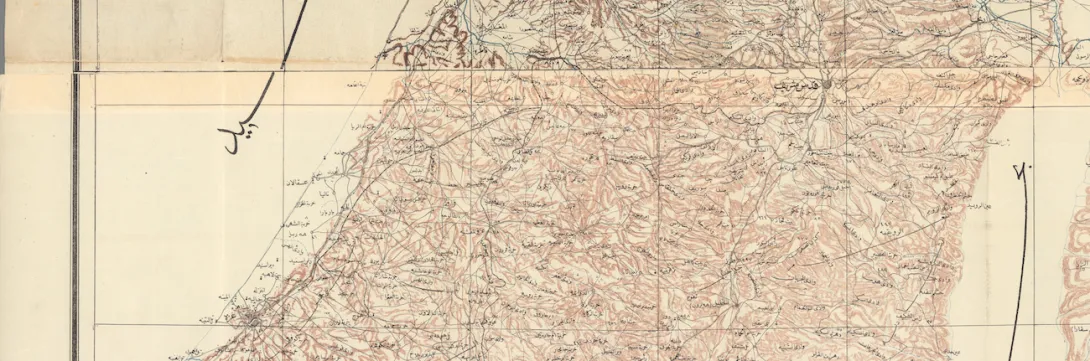
Topographic map marking the historic districts of Palestine before the 1948 Nakba, hosted by Palestine Remembered.
Digital Archives and Primary Source Collections
Al-Nakba: 1948 Palestinian Exodus, American University of Beirut (AUB) Library Guide
Research guide by the American University of Beirut Library, features a mix of digital collections, digitized resources, and physical holdings available to visitors. In addition to an oral history collection containing Nakba survivors’ testimony, the guide features Arabic and English-language published texts, primary source collections, and resources related to the Zionist movement and the drive to ethnically cleanse Palestine, refugees, the Nakba, and Palestinian dispossession.
The Avalon Project, hosted at the Yale Law School, is a collection of primary source documents relevant to law and diplomacy, available online for free. Contains diplomatic records, including UN documents relevant to the Palestine question, UN resolutions, and treaties related to the Nakba, dispossession of Palestinians, Palestinian refugees, and the right of return in international law. Includes a searchable database. Consult the Avalon Project collection “The Middle East 1916-2001: A Documentary Record” for key documents.
Archive of Mahrous Afandi Bseiso (1884-1968), a Palestinian entrepreneur and landowner in Beersheba who meticulously documented his records and land deeds before Beersheba was ethnically cleansed in the 1948 Nakba. Bseiso sought refuge in the Gaza Strip, along with much of his extended family who became important leaders in diverse aspects of Gaza’s life, culture, and politics. Spanning the years 1906-1977, the collection contains business records, receipts, land deeds, maps, and photos. The Bseiso Family Archive is an important tool for researchers of the social history of Palestine, the history of the Gaza Strip, Beersheba, and the impact of the Nakba on Palestinians.
Eltaher Collection, Library of Congress (LOC)
The Eltaher Collection, hosted by the Library of Congress, contains the records of Muhammad Ali Eltaher (1896-1974), a prominent Palestinian anti-colonial writer, publisher, and Arab nationalist thinker. This is a digitized collection of published texts by Eltaher as well as books and memoirs by Palestinian leaders. The collection also features cultural publications produced by refugees in exile, including periodicals from displaced Palestinians in Lebanon. Sources are primarily in Arabic, with a limited number of English-language materials that shed light on Palestinian engagement with international audiences, statements from the Arab Higher Committee, and materials exposing Zionist plans for colonial expansion and the dangers of partition plans prior to the 1948 Nakba. This archival collection is a useful resource for the study of Palestinian attempts to achieve independence under British rule, and Palestinian responses to the Nakba. Read more about the collection here.
Birzeit University’s institutional repository, providing PDFs of publications by Birzeit faculty and researchers on a diverse range of topics, including scholarship on the Nakba. Arabic and English.
Foreign Relations of the United States (FRUS) Series – Department of State, Office of the Historian
Official primary source collection of State Department records, accessible through document collections published in volumes or through a keyword search on the FRUS page. Over 500 FRUS volumes are made available to download free-of-charge in ebook format by the Office of the Historian. Volumes are organized by presidential administration, beginning with Abraham Lincoln’s presidency through Ronald Reagan’s presidency, with volumes from George H.W. Bush’s presidency forthcoming. Collections are not exhaustive document records, but are selected materials from “Presidential libraries, Departments of State and Defense, National Security Council, Central Intelligence Agency, Agency for International Development, and other foreign affairs agencies as well as the private papers of individuals involved in formulating U.S. foreign policy,” according to the State Department Office of the Historian’s “about” page. The FRUS collection contains US government records that include reactions in Washington to the Nakba and establishment of the state of Israel, mass expulsion, the United Nations Relief and Works Agency for Palestine Refugees (UNRWA), and the unresolved fate of Palestinian refugees.
Interactive Encyclopedia of the Palestine Question
Joint project of the Institute for Palestine Studies (IPS) and the Palestinian Museum featuring timelines, biographies of key historical figures, interactive maps, and primary sources. Platform contains many resources relevant to the broad theme of the Nakba, including entries on Palestinian refugee camps throughout the region.
Oral history project that interviews Palestinian refugees expelled in the 1948 Nakba. The project began in 2002 and its collections have expanded over time. Arabic audio, English subtitles.
Palestine Memory - ذاكرة فلسطين
Digital resource for the history of the Palestinian national movement and Palestinian resistance to the Nakba. Archival materials of political parties, local Palestinian organizations, personal papers, family papers, and an important Palestinian newspaper archive. Arabic only.
Palestinian Oral History Collection (POHA)
Digital archive of oral history testimonies from Palestinians, particularly survivors of the 1948 Nakba. The audiovisual collections are divided into four themes: “uprooting,” on the ethnic cleansing of Palestine; “folktales,” which documents Palestinian folklore and culture before 1948; “Ayn al-Hilwat,” featuring interviews from women living in the Ayn al-Hilwa refugee camp; and “biographies,” or oral histories compiled on the lives of Palestinians. AL-JANA and Nakba Archive conducted the interviews, and AUB library archived, indexed, catalogued, digitized, and now maintains the collection. Joint project of the American University of Beirut, the Nakba Archive, and the Arab Resource Center for Popular Arts (AL-JANA). Arabic and English.
Palestine Poster Project Archives
Digital archive of political posters on Palestine. Includes posters from throughout the Arab world and global posters dedicated to solidarity with the Palestinian struggle. Features materials on the Nakba. Also features Zionist posters from 1897 onward for reference on colonization plots that culminated in the 1948 Nakba and establishment of the state of Israel.
Recognition of the State of Israel - National Archives and the Harry S. Truman Library and Museum
Collection of digitized primary sources on US recognition of the Zionist movement and nascent state of Israel. Includes documents dated from the years 1943-1974. Records shed light on Washington’s reaction to Israel’s establishment as the Nakba unfolded and the question of Palestinian refugees continued to be unresolved.
Digital archive containing Palestinian sources on the Palestinian liberation movement. Open source; primarily consists of published materials and periodicals. Collection includes sources that address themes surrounding the Nakba. Most materials are in Arabic, but archive includes English materials as well.
United Nations Digital Library
Digital archive of the UN. Includes voting records, official UN records and publications, speeches, oral history interviews, and datasets. Collections relevant to the study of the Nakba such as records of the UN General Assembly (UNGA), human rights bodies, and the UN Relief and Works Agency for Palestine Refugees (UNRWA).
United Nations Information System on the Question of Palestine
Digital archive of UN, League of Nations (predecessor to the UN), and other political documents related to Palestine spanning from 1915 to the present day. Main landing page lists features including a history section, information on the UN Committee on the Exercise of the Inalienable Rights of the Palestinian People website, a legal study on the Israeli occupation, a list of Palestinian civil society organizations affiliated to the committee, digital booklets on UN exhibits on Palestine, and information on Palestine in the UN System which details all UN bodies, agencies, and committees that work on the different facets of the question of Palestine. Includes materials relevant to the study of the Nakba, Palestinian refugees, the right of return, and international law.
Digital photograph and film archive documenting the lives of Palestinians living in UNRWA refugee camps across generations as a result of the ongoing Nakba and ethnic cleansing by Zionist militias and Israel. Includes archival photographs of Palestinians as they are expelled and seek refuge in 1948. Contains images from Palestinian refugee camps.

Physical Archives
A few notes on using physical archives for your research needs:
- Most archives require appointments in advance of your visit. Check out this guide by the Society of American Archivists (SAA) explaining what archives are, how to use archives effectively, and how to plan for your first visit.
- Consult library special collections of nearby colleges and universities for sources pertinent to your research needs in their special collections. While access to university libraries is typically restricted to university affiliates, special collections in libraries are often accessible by appointment in coordination with library staff.
- Many archives and libraries will accommodate requests for digital scans of materials within certain parameters, which are subject to copyright limitations and typically, a copy fee. Consult the archive or library policy to explore if this option is available for your research needs.
Freedom Archives, Palestine Collection
Nonprofit archive of progressive activism in the United States that has catalogued and preserved key documents on the Palestinian struggle. Some materials deal with the ongoing Nakba and Palestinian efforts to resist the Nakba and Zionist settler colonialism. The Palestine catalog has the following subcollections: "Arab Perspectives on Palestine," "Anti-Zionism," "Human Rights in Palestine," "International Perspectives on Palestine," "Institute for Palestine Studies," and "Palestinian Revolutionary Organizations." Primarily a physical archive (located in Berkeley, California) with some digitized materials as well.
The Library of Congress is the official national library of the United States, located in Washington, DC. It serves as the research wing for the US Congress, offering support through the Congressional Research Service (CRS), a think tank housed in the LOC that provides research materials and original reports for members of Congress. The LOC is the largest library in the world; it is free and accessible to the public and also hosts digital collections. In addition to government records, researchers concerned with the study of the Nakba will benefit from materials housed in the LOC’s expansive African and Middle Eastern Division. Explore the LOC catalog, LOC Research Guides, and the library’s digital collections to locate reports, published texts, rare books, newspapers, photographs, and other primary and secondary sources.
National Archives and Records Administration (NARA)
NARA preserves, catalogues, and stores documents related to US government history for public access. Find primary sources related to Congress, the Supreme Court, and federal agencies like the State Department, the Federal Bureau of Investigation (FBI), the Central Intelligence Agency (CIA), and more. Source types include but are not limited to paper records, photographs, and audiovisual materials. The National Archives digital collection contains a number of sources relevant to the study of the Nakba, Palestinian refugees, and US complicity, such as archival photographs from Palestinian refugee camps, declassified documents, and speeches. NARA has several locations and is responsible for the management of presidential libraries throughout the US. Consult this introductory guide and the National Archives Catalog to identify the location(s) relevant to your project.
United Nations Archives and Records Management Section
Located in New York, the United Nations Archives and Records Management Section provides access to its archives for UN diplomats, UN staff, and the general public. Find materials related to the Nakba in the collections of the Department of Peacekeeping Operations (DPKO), UN Truce Supervision Organization (UNTSO), the United Nations Mediator for Palestine (1948-1949), the collections of the Secretaries-General, and more.
Archives Concerning Israel and/or International Zionist Organizations
There are many ways to study the history of the Nakba. In addition to the source materials listed above, which include both academic and general sources and highlight Palestinian narratives of their dispossession and collective trauma, some researchers choose to study primary materials from Israeli and/or Zionist sources. Using these materials, researchers have explored themes such as the ethnic cleansing of Palestine, establishment of the state of Israel, militarism, and expansionism. Through the critical evaluation of these primary sources, historians have successfully articulated counterarguments to claims perpetuated by the state of Israel, and international Zionist organizations, that either helped facilitate Israel’s establishment, mass expulsion, and early massacres of Palestinians, or supported Israeli policies that perpetuate the ongoing Nakba today. For example, Ilan Pappe’s book, The Ethnic Cleansing of Palestine, represents a systematic rebuttal of the claim in Zionist historical writing that violence against Palestinians in the Nakba was not premeditated, and where Zionists concede that it occurred, they assert that it was an accident amid the chaos of war. Pappe’s arguments were based on his thorough examination of Israeli archives and Hebrew language materials of Israel’s founders, military leaders, and Zionist organizations. Similarly, Nur Masalha’s book, The Politics of Denial: Israel and the Palestinian Refugee Problem, uses Israel State Archives collections to provide a detailed accounting of how the institutions and leaders that would form the core of the state of Israel planned for the mass expulsion and forced transfer of Palestinians, and the creation of the still-unresolved Palestinian refugee crisis through their dispossession. Visit the “List of Relevant Books” on the Nakba topic page for more examples of important historical literature.
It is a complicated decision to pursue historical studies using these collections, and access to these materials is not equal, nor is it fair. In the section to follow, we elaborate on these inequalities before providing an introduction to a few relevant archives.
A Note on Israeli Archives: Inequalities and Barriers to Access
Access to Israeli archives is not equally available to all researchers. Palestinian scholars from the West Bank, Gaza, East Jerusalem, and the global diaspora are often denied entry to Israel and occupied Palestinian lands, as Israel imposes severe restrictions on movement and access. Even for Palestinian researchers who were able to enter Israel and reach Israeli archives, they often faced difficulties accessing materials based on their identity.
In recent years, the Israeli government has placed stricter controls over the public availability of documents and access to archives. In 2016, the Israel State Archives (ISA) announced that it would transition from physical archival access to digital archives, a change that was presented as a method of efficiency and convenience for researchers. However, it was meant as a way to place all records released to the public for review by the Israeli military censor.
Israel has reclassified many previously declassified documents, stripping away access to sources that had once been available to researchers. In 2019, the Israeli government amended its Archive Law, which extended the classification period for archives of the Shin Bet, Israeli Atomic Energy Commission, and military records deemed to possess “‘raw intelligence material’” from 70 years to 90 years. As historian Shay Hazkani explained, under the 2019 amendment “‘even what is classified is classified.’”
Researchers and NGOs like the Akevot Institute have documented unannounced removals of materials from private and kibbutz archives, and note that state practices often obscure catalog listings, delay declassification without basis, or deny requests without explanation. These policies include (but are not limited to) movement restrictions, reclassification, censorship, and active archival control, meaning that Palestinians and many other researchers face structural barriers to studying the 1948 war, the Nakba, and their aftermath.
List of Archives Concerning Israel and/or Zionist Organizations
- Central Zionist Archives (CZA): Founded in 1919 in Berlin and transferred to Jerusalem in 1933, the CZA functions as the archive for the World Zionist Organization, the Jewish Agency, the Jewish National Fund, and other related bodies. In addition to archival collections belonging to Zionist organizations, the CZA hosts the personal collections of many Zionist leaders and founders of the state of Israel, such as David Ben-Gurion, which often include their recollections of military campaigns aimed at removing Palestinians from their land in the Nakba.
- The IDF and Defense Establishment Archives: The IDF and Defense Establishment Archives, located in Tel Aviv, houses files and documents related to the Israeli military and its security agencies. The archive includes the records of Zionist paramilitaries that operated in Palestine prior to Israel’s establishment, including the Haganah, Palmach, Lehi, and Hashomer. These military organizations carried out the ethnic cleansing of Palestine and later formed the basis of the Israeli military. Affiliated with this archive is the Haganah Historical Archive (HHA), which is housed in a separate location in Tel Aviv.
- Israel State Archive (ISA): Constitutes the national archives of the state of Israel, located in Jerusalem. Collections include the records of government agencies such as the Israeli Ministry of Foreign Affairs, the Israel Land Administration, the Custodian of Absentee Properties, and audiovisual collections–all of which include records related to the Nakba, Palestinian dispossession, and Israeli expansionism. Hosts a mix of digitized and physical records, although as explained in the introductory note above, the ISA has been digitizing records and restricting physical access to materials in a move to place stricter state controls on which documents are viewed by the public.
- Knesset Archives: The Knesset, Israel’s parliament, hosts an archive in Jerusalem which consists of parliamentary records from 1948 through the present day. Collections include administrative records, publications, the personal records of Members of Knesset (MKs), and Knesset committee meeting minutes.
- The National Library of Israel: In addition to the ethnic cleansing of Palestinians and the conquest of their lands, homes, and property, the nascent state of Israel looted over 60,000 books owned by Palestinians and other print materials. About 6,000 of these stolen books are held in the National Library of Israel. The library also holds a copy of all books published in Israel, the personal papers of key Zionist and Israeli leaders, map collections, audiovisual collections, and other primary sources relevant to the study of the Nakba. The following collection is worth noting:
- Jrayed: The National Library of Israel’s digital platform containing Palestinian and Arabic newspapers and journals from the late Ottoman and British Mandate periods. The titles include a wide variety of political, cultural, religious, and economic viewpoints, and span dailies to quarterly periodicals. It is searchable by title and author and can be filtered by date, title, city, and occurrence. An alternative platform to research Arabic newspapers is Palestine Memory.