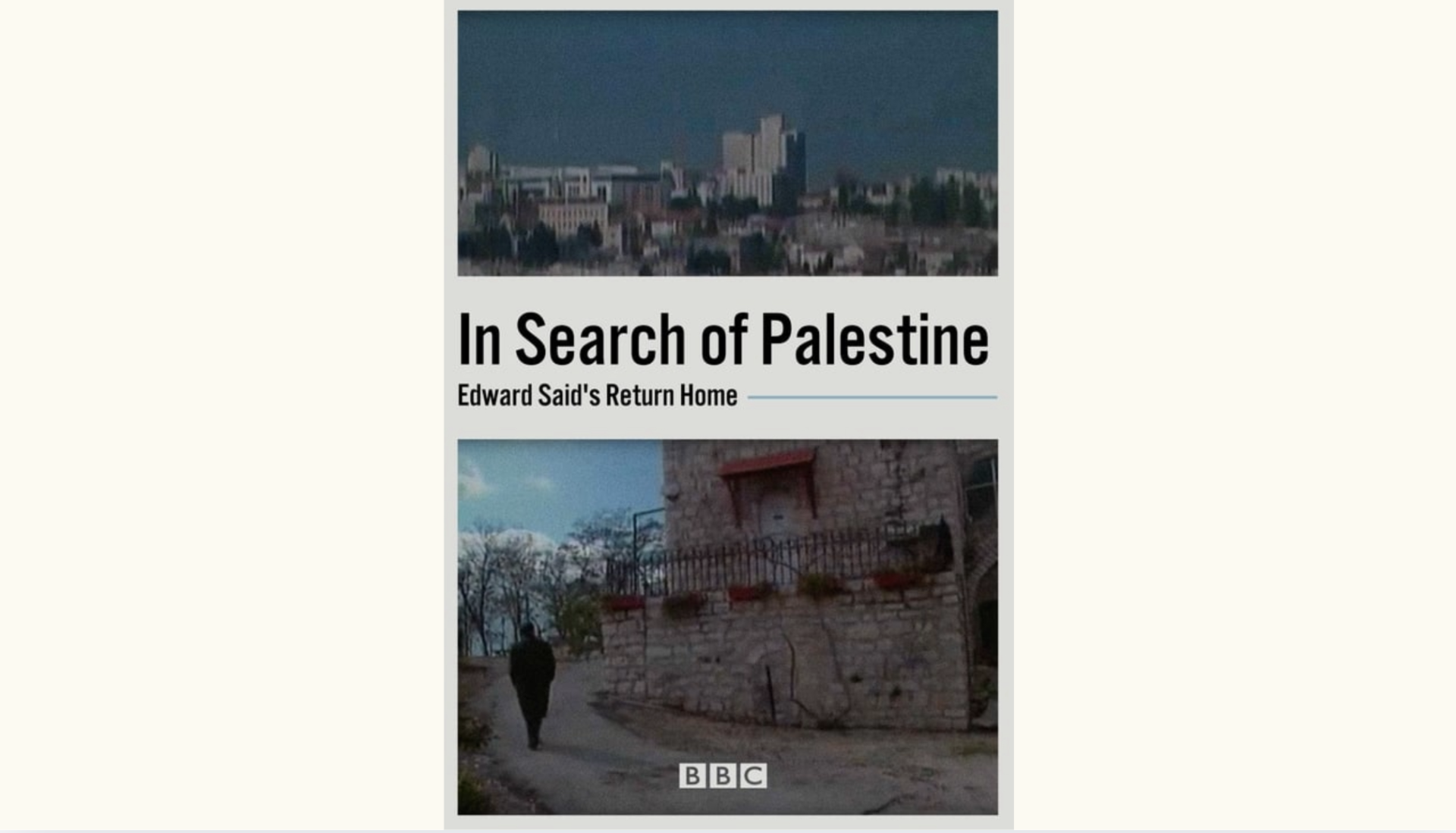
BBC documentary by Charles Bruce that follows Palestinian American intellectual and literary critic Edward Said on his first visit to Palestine after 50 years of exile as a result of the 1948 Nakba and the ethic cleansing campaigns of Zionist militias. In his narration, Said introduces his family's story of exile from their home in Jerusalem, and his mother's longing to return to her family hom in Nazareth, within the wider context of the collective exile of Palestinians. Said interviews leading intellectuals of his day, including the late Ibrahim Abu-Lughod, as well as Nakba survivors and Palestinian organizers on how the Nakba impacts their daily realities in the face of Israeli oppression, occupation, discrimination, and the Oslo Accords, all of which Said criticized fiercely. Notably, the film was censored in the United States. In a series of interviews with David Barsamian (published in the 2003 book Culture and Resistance), Said revealed that the BBC was unable to distribute the film on any major US network. The film only aired on two local channels in the US due to Said's connections at two stations. He commented, "if they want to show one Palestinian film they have to show five films from the Israeli point of view. What happeend to my film was very much of that order." This source is valuable for research on Edward Said, the Nakba, Palestinian exile, Palestinian intellectual history, the Oslo Accords, media censorship, and the lived realities of Palestinians under Israeli occupation.