What does US support for Israel entail and what forms does it take?
US support for Israel takes several forms including financial support, diplomatic support, legal privileges, security coordination, arms sales, and trade agreements.
Domestically, at the federal, state, and local levels, legislators have passed laws to suppress criticism of Israel and criminalize Palestine solidarity in order to stifle dissent, counteract shifting US public opinion that is increasingly critical of the US-Israel relationship, shield Israel from boycotts and divestment, and ignore mass demands to end US military financing to Israel.
How much financial support does the United States give Israel each year and where does it come from?
In Brief: The United States provides Israel with about $3.8 billion annually in military aid. It is funded by American taxpayers through the State Department’s Foreign Military Financing program, which supplies Israel with advanced US weapons to maintain its regional military advantage.
In More Detail: According to the US Department of State, Israel is the recipient of nearly $3.8 billion annually in military financing. In fact, Israel has received a staggering $130 billion total in US economic and military assistance since its establishment in 1948 (valued at approximately $300 billion in constant 2022 dollars).
From a technical standpoint, US military assistance to Israel is paid out through the Department of State’s Office of Security Assistance Foreign Military Financing (FMF) grant assistance program. FMF grants allow US allies to “acquire U.S. defense equipment, services, and training.” In the case of Israel, the FMF program helps Israel protect its status as the strongest army in the region, referred to as Israel’s Qualitative Military Edge (QME).
The FMF program protects Israel’s QME through two mechanisms:
- Providing Israel with the most advanced military technology available.
- Limiting the export of US arms to other states in the region, which would guarantee Israel’s military advantage in the region.
In short, the American taxpayer funds the FMF program. Israel does not have to use its own state budget to purchase weapons, thus pushing this cost onto the American people.
How much of US financial support to Israel is allocated to military purposes, and how is it disbursed? What unique privileges are afforded to Israel?
In Brief: Since shifting from economic to predominantly military aid in 1959, the United States has provided Israel with more than $251 billion in military financing. It is structured through multibillion-dollar agreements, like the 2016 Memorandum of Understanding between the two countries, and delivered annually as lump-sum Foreign Military Financing grants that generate interest and fund both Israeli weapons production and periodic supplemental support for major assaults, such as the 2014 war on Gaza.
In More Detail: Prior to 1959, US financial support took the form of economic aid. After approving a military loan to Israel in 1959, the vast majority of US assistance became military financing, as part of the FMF program. Between 1959 and 2024, the total value of US military financing for Israel amounted to approximately $251.2 billion (in constant 2024 dollars).
In 2016, the Obama administration signed an agreement providing Israel with $38 billion in security assistance for fiscal years 2019-2028. The Memorandum of Understanding (MOU) signed in 2016 increased the total amount of security assistance Israel was set to receive from the $30 billion allotted to Israel in the previous MOU, signed in 2007 under the Bush administration. The State Department described the 2016 agreement as “the single largest pledge of bilateral military assistance in U.S. history.”
Israel receives its annual military support in the form of a lump sum at the start of the US fiscal year, in accordance with a 1991 Congressional mandate. After receiving its annual payment—approximately one-tenth of the MOU’s $35 billion in FMF grants and $5 billion in appropriations for Israel’s missile defense—Israel deposits the sum in an account with the US Federal Reserve Bank, where it gains interest. Consequently, this accumulation of interest increases the annual amount available to Israel to spend on weapons of war, used to facilitate its occupation of Palestinian land, expansionism, and military aggression against Palestinians and neighboring states. Further, Israel has been allowed to spend 25 percent of these FMF grants to purchase weapons from its domestic arms industry (although this practice will not be allowed to continue, effective in 2028).
In some years, the US government has approved supplemental military support in addition to planned expenditures; typically, this has been to support Israel’s wars on Gaza. For example, in 2014, Congress approved a supplemental $225 million to fund Israel’s Iron Dome system during its war on Gaza, a 51-day assault in which the Israeli military killed over 1,500 Palestinians, one third of whom were children.
What sort of costs has the US incurred by supporting Israel’s genocide in Gaza and its regional war?
In Brief: The United States has incurred more than $22.7 billion in additional military spending. By supporting Israel’s genocide in Gaza and its wider regional war, the US now faces heightened regional security risks, a sharp rise in anti-American sentiment, and significant damage to US global standing and credibility in international institutions.
In More Detail: According to a study published by the Costs of War Project at Brown University, the US spent $17.9 billion in additional military financing to Israel between October 7, 2023 and September 30, 2024. Further, the Costs of War Project calculated an additional $4.86 billion in military expenditures related to an expanded US presence in the region to support Israel’s regional war, making the total upwards of $22.76 billion.
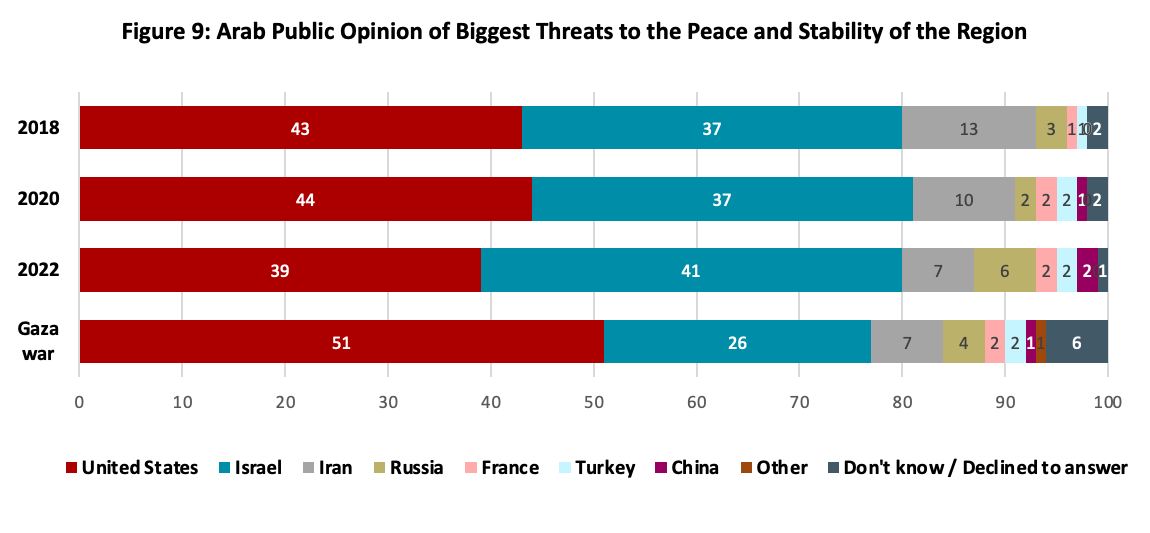
The US-Israel alliance is expensive. While foreign aid only accounts for about 1 percent of the annual US budget, Israel is one of the top annual recipients of Foreign Military Financing. But the cost of the US-Israel alliance does not only come down to line items on a budget. The unquestioned backing of Israel’s actions in terms of financial support, military coordination, and diplomatic cover comes with costs that are difficult to measure, though they are increasingly apparent. The heightened US military presence in the region, as a regional policeman to protect Israel, brings with it security risks and growing anti-American sentiment in the Arab world, Middle East, and beyond. According to a survey--conducted in 2023-2024 by Arab Center Washington DC (ACW) and The Arab Center for Research and Policy Studies (ACRPS)--of 8,000 respondents from 16 Arab countries on public opinion regarding Israel’s war on Gaza, 51 percent reported that they viewed the United States as the biggest threat to regional peace and stability, up from 39 percent in 2022. When asked to evaluate the “US response to the Israeli war on Gaza,” an aggregated 82 percent across the region viewed the US role as “very bad” and 12 percent “bad,” with only 3 percent reporting a favorable view.
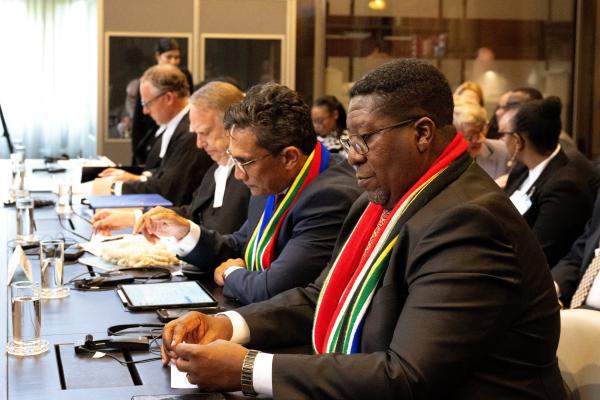
US support for Israel’s genocide in Gaza has impacted US global standing as well as its commitment to international cooperation. Take the use of US veto power at the United Nations as an example. The US first used its veto power at the UN Security Council in 1972 to shut down a resolution calling on Israel to end its aggression in Lebanon. Since then, the US has used its veto power 49 times to shield Israel from criticism in the international arena. In 2024, the International Court of Justice (ICJ) issued provisional measures ordering Israel to stop military actions that violate the 1948 Genocide Convention in response to South Africa’s case against Israel, and the International Criminal Court (ICC) issued warrants for the arrest of Israeli Prime Minister Benjamin Netanyahu and former Defense Minister Yoav Gallant. In the context of a genocidal war in which (at that time) Israel had killed over 46,000 Palestinians and continues to face global condemnation, US vetoes to block ceasefire measures at the UN Security Council present not only an affront to the international bodies and international community, but to global opinion at large. Further, US condemnation of the ICJ, the judicial body of the United Nations, constitutes not only a condemnation of international cooperation, but a denunciation of an international body the US itself helped establish in 1945 in the aftermath of World War II as a means of preventing genocides and large-scale armed conflict in the future.
What are the origins of the US-Israel relationship and why does the United States support Israel?
In Brief: The US-Israel relationship began with Washington’s early recognition of Israel in 1948 and deepened during the Cold War, especially after 1967. Today, many explain its persistence through a combination of ideological commitment to Zionism, the economic interests of the military-industrial complex, and the influence of the Israel Lobby, even as Israel increasingly functions as a regional liability for the United States.
In More Detail: US leaders often boast of being the first country to recognize the state of Israel when Zionist leaders declared statehood in May 1948. It is important to note that during the establishment of Israel, nearly 1 million Palestinians were forcibly expelled from their homes, becoming refugees; this calamitous and violent historical event is commemorated by Palestinians as the Nakba, or “catastrophe” in Arabic, and they affirm that the dispossession continues to this day. The United States recognized Israel’s statehood despite its knowledge of its mass expulsion of Palestinians, as Zionist militias began ethnic cleansing campaigns months prior. Therefore, statehood recognition set the tone for both the US-Israel relationship and Washington’s attitude toward Palestine and the Palestinians.
The US-Israel relationship drew closer over time. Eventually, Washington came to view Israel as a strategic ally in the region during the Cold War, especially after the 1967 war. However, this alliance also created deep resentment within Arab states against the United States.
Following the collapse of the Soviet Union and the end of the Cold War, and the liability Israel has posed regionally in this context, the causes driving the sustained, high-level US-Israel alliance have been the subject of debate. There are three major arguments:
- Ideology perpetuates the US-Israel alliance. Lawmakers promote the state of Israel based on their personal commitment to Zionism, the political ideology that calls for a Jewish state in historic Palestine--which was the driving force behind the establishment of the state of Israel.
- Economic motives and the profitability of the military-industrial complex in the United States and in Israel propel the alliance, given that Israel is a leading client for weapons produced in the US and that Israel tests weapons on Palestinians for future US export.
- The Israel Lobby is the force behind the sustained relationship, meaning that the donations and pressure of a coalition of organizations and political action committees on political candidates and lawmakers concerned with re-election are a potent motivation for the close US-Israel alliance.
For many, some combination of the arguments featured above explains the persistence of the US-Israel alliance in the post-Cold War era, as Israel’s behavior has become more and more of a liability for the United States.
What is the Israel Lobby?
In Brief: The Israel Lobby is a network of organizations that work to secure unconditional US support for Israel by pressuring elected officials and shaping public discourse, working to influence policy through campaign funding, legislative coordination, media pressure, and efforts to marginalize critics of Israel.
In More Detail: The Israel Lobby is a coalition of organizations and political action committees (PACs) that promote unconditional US support for Israel.
According to scholars John Mearsheimer and Stephen Walt, co-authors of a paradigm shifting article that led to the publication of their book The Israel Lobby and U.S. Foreign Policy (2007), the Israel Lobby pursues two strategies to maintain the relationship: applying intense pressure on the White House and Members of Congress, and dominating the public debate on Israel-Palestine.
Pressure on elected officials is carried out in many ways, including using campaign contributions to pro-Israel political candidates from PACs and challenging candidates who criticize Israel; organizing and mobilizing constituents to rally around or push back against legislation concerning Israel; positioning lobbyists and pro-Israel think tank figures to be the first call for support in researching and writing legislation; writing speeches, and rallying votes on legislation related to Israel; working to exclude critics of Israel out of important foreign policy leadership positions; and promoting the appointment of pro-Israel figures and Israel lobby associates to high-level advisor roles.
Dominating public discourse entails efforts such as placing heavy pressure on media outlets to maintain a staunchly pro-Israel line; demanding elected officials make routine pro-Israel statements; protesting media coverage sympathetic to Palestinians; and attempting to stifle criticism of Israel on college campuses by surveilling and harassing students, faculty, and staff who speak out in solidarity with Palestinians or challenge pro-Israel narratives on campus.
A leading force in the Israel Lobby is AIPAC, the American Israel Public Affairs Committee, a group closely linked to the Israeli government. Other Israel Lobby groups include Christians United for Israel (CUFI), Democratic Majority for Israel (DMFI), J Street, and the Zionist Organization of America (ZOA). Think tanks affiliated with the Israel Lobby include AIPAC-offshoot Washington Institute for Near East Policy (WINEP), the Foundation for Defense of Democracies (FDD), and the Jewish Institute for National Security of America (JINSA).
What is the impact of this convergence of pro-Israel efforts in Washington?
In Brief: The convergence of pro-Israel efforts in Washington ensures that US policy remains strongly pro-Israel regardless of public opinion, creating an environment where elected officials face intense pressure not to question the relationship and where lobbying power, campaign influence, and insider political access effectively prevent open debate on Israel-Palestine in government.
In More Detail: For many observers, the consequence of pro-Israel pressure campaigns in Washington is that public opinion is not reflected in policy, and elected officials do not take constituent concerns on Palestine/Israel seriously. As Mearsheimer and Walt explain, AIPAC leverages its immense power to prevent US support for Israel ever being called into question in the halls of government:
"The bottom line is that AIPAC, a de facto agent for a foreign government, has a stranglehold on Congress, with the result that US policy towards Israel is not debated there, even though that policy has important consequences for the entire world. In other words, one of the three main branches of the government is firmly committed to supporting Israel."
Even New York Times columnist Tom Friedman, a staunch supporter of Israel, criticized AIPAC and the Israel Lobby in 2022 for successfully leveraging “their power and influence to still the hand of any administration wanting to have a more serious and energetic and vigorous policy.” Thirty years prior to this admission, Friedman reported on a scandal in which David Steiner, the president of AIPAC, was forced to resign after a private phone call recording was leaked to the Washington Times in which Steiner described secret dealings between AIPAC, the George H.W. Bush administration, and the Bill Clinton campaign:
"I met with [U.S. Secretary of State] Jim Baker and I cut a deal with him. I got, besides the $3 billion, you know they're looking for the Jewish votes, and I'll tell him whatever he wants to hear…Besides the $10 billion in loan guarantees which was a fabulous thing, $3 billion in foreign, in military aid, and I got almost a billion dollars in other goodies that people don't even know about."
Steiner also described securing assurances for a “whole shopping list of things” from Secretary of State James Baker and the Pentagon, granting leave to two AIPAC employees to work on the Clinton campaign who “are going to get jobs” in the administration, in addition to the appointment of WINEP affiliates Martin Indyk and Michael Mandelbaum to roles as foreign policy advisors. While Steiner retracted these statements, it was far from the last time that Israel Lobby figures made similar claims.
Have there ever been proactive measures by Washington in support of Palestinians?
In Brief: Yes, and although rare, Washington has seen some limited proactive measures in support of Palestinian rights, including Representative Betty McCollum’s (D-MN) pioneering 2017 bill to block US funding for Israel’s military detention of Palestinian children, Representative Rashida Tlaib’s (D-MI) resolution recognizing the Nakba, and Senator Bernie Sanders’s historic but unsuccessful Joint Resolutions of Disapproval to halt an arms sale to Israel.
In More Detail: The first piece of proactive legislation drafted in defense of Palestinian rights was put forward in 2017 by Representative Betty McCollum (D-MN). The historic bill, which was reintroduced in succeeding sessions of Congress, sought to cut off US Foreign Military Financing grants, additional appropriations, and arms sales that are used by Israel for the purpose of the detention, abuse, and torture of Palestinian children in Israeli military prisons. Defense for Children International-Palestine, a leading group in the grassroots campaign against the Israeli military detention of Palestinian children that culminated in the introduction of Rep. McCollum’s bill, noted the following:
"By prohibiting U.S. financial support of abuses against Palestinian children in the Israeli military detention system, H.R. 2407 aligns U.S. policy toward Israel with existing U.S. law and international law.
Specifically, the bill amends Section 620M of the Foreign Assistance Act of 1961 (22 U.S.C. 2378d) commonly known as the ‘‘Leahy Law’’ by adding a new subsection that includes a generally applicable limitation prohibiting U.S. military aid from being used by foreign armed forces to support the military detention, interrogation, abuse, or ill-treatment of children in violation of international humanitarian law. The amendment would apply to any foreign armed forces body that is detaining children in a military court system, including Israel."
The campaign to end the detention of Palestinian minors by the Israeli military makes it clear that unconditional support for the Israeli military is not only a violation of international law, but it is also a violation of US law in many cases.
The Leahy Laws are provisions that prohibit the Department of Defense (renamed the Department of War in 2025) and the Department of State, respectively, from providing US financial assistance to military units that violate human rights. The State Department provisions, introduced by Senator Patrick Leahy (D-VT) in 1997 and codified in 2008, take the form of an amendment to the Foreign Assistance Act of 1961, under Section 620M, which stipulates that any financial assistance authorized by the Foreign Assistance Act or the Arms Export Control Act of 1976 must not be issued to “any unit of the security forces of a foreign country if the Secretary of State has credible information that such unit has committed a gross violation of human rights." The McCollum bill seeks to amend Section 620M to outlaw the use of US military aid in the detention, torture, and abuse of children, a set of human rights violations that Israel routinely commits against Palestinian children.
Despite the introduction of this legislation, it has never been brought to a vote in Congress due to the total unwillingness of the majority of elected officials to challenge Israeli military practices, even as they relate to human rights violations against children, and even when those practices violate US law.
Other examples include:
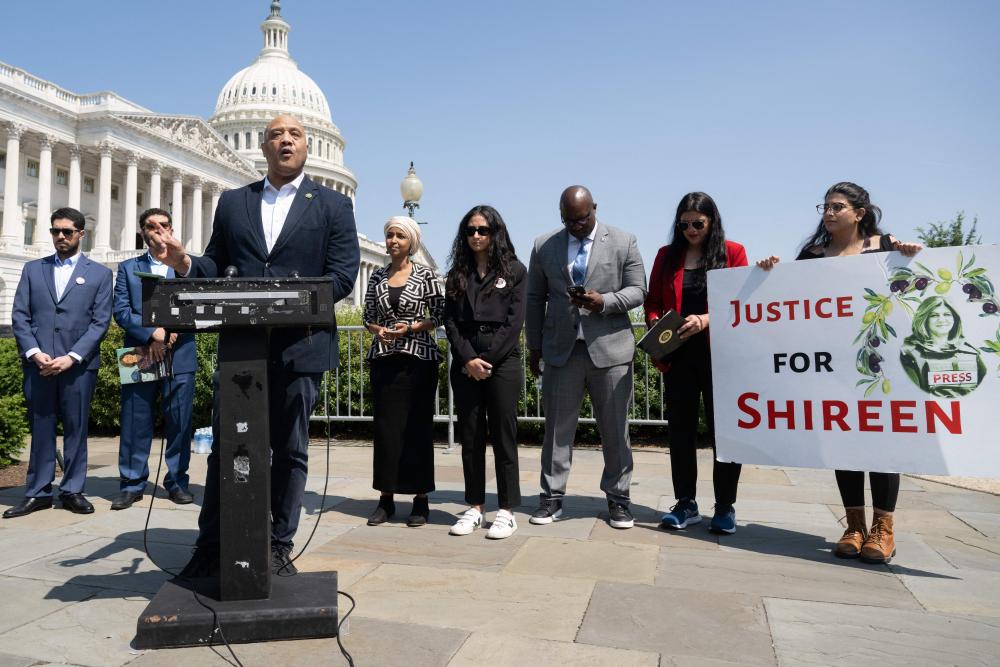
- Representative André Carson’s (D-IN) introduction of the Justice for Shireen Act on November 14, 2022, which called for an investigation into Israel’s killing of Palestinian American journalist Shireen Abu Akleh while she reported on an Israeli attack on the Jenin Refugee Camp in the West Bank. In a statement, Representative Carson urged that Congress must “ensure that U.S. weapons, equipment or military services were not used to kill Americans on foreign soil.”
- Representative Rashida Tlaib’s (D-MI) introduction of a House Resolution, “Recognizing the ongoing Nakba and Palestine refugees’ rights,” on May 10, 2023, to commemorate the 75th anniversary of the Nakba. Representative Tlaib re-introduced this resolution to commemorate the 77th anniversary of the Nakba, in 2025, as Israel’s genocide in Gaza unfolded. In a statement, she said, “The Nakba did not end in 1948, but continues to this day as Israeli forces commit genocide in Gaza.”
- The introduction of the Joint Resolutions of Disapproval (JRDs) by Senator Bernie Sanders in late 2024, which did not pass but made history as the first time JRDs were used in an attempt to prevent an arms sale to Israel.