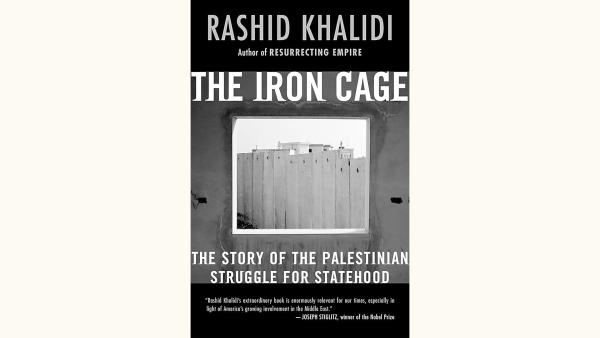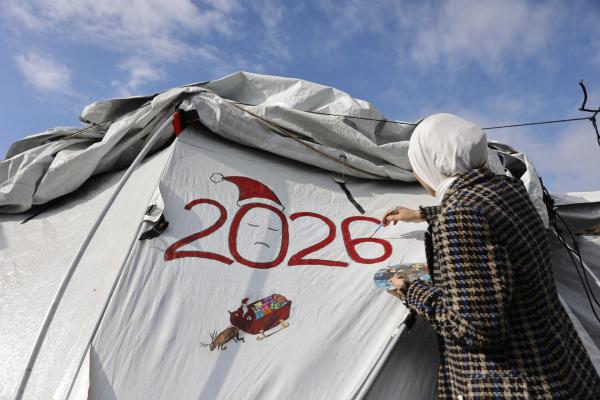
Are you a researcher looking for reputable sources on the West Bank? Our guide has sources for a diverse set of researchers—from students looking for secondary sources like peer-reviewed academic journals, to journalists seeking reliable databases, to specialists producing knowledge in academia or in the information space, and more. Find resources such as publications, databases, and archives on the following subthemes:
- West Bank History
- Palestinian Refugees, Displacement in the West Bank
- Political Economy
- Humanitarian Conditions in the West Bank
- Political Movements in the West Bank
- Threats of Israeli Annexation
- Settlement Expansion
- Israeli Apartheid
- Israel’s Assaults on the West Bank
- International Law
- The West Bank in Regional and International Affairs
- Public Health
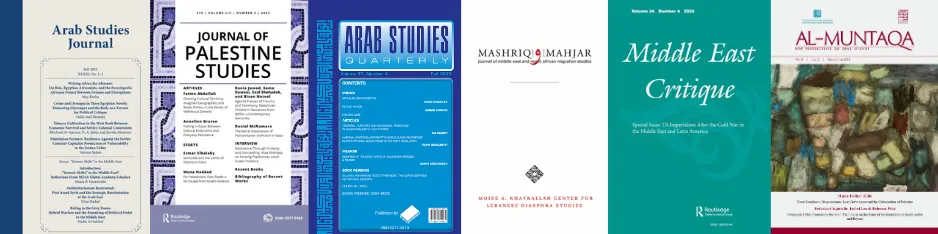
Academic Journals
A note for students: our guide features two types of peer-reviewed journals: those that require an individual subscription or access via your institution, and open-access journals.
Open-access journals are accessible to all researchers, free of charge.
For access to paywalled journals, check to see if your university subscribes to the journal you are interested in, which will grant you physical and/or digital access. If your university does not provide institutional access to any of the journals listed below, here are some options that might be available to you:
- Submit a request to your librarian to acquire institutional access, or to purchase access to a particular issue of the journal you are interested in.
- Submit a scan-and-deliver request for the particular article you would like to read. Some universities have resource sharing agreements with one another and will fulfill requests for article scans, as well as scans of book chapters (limits apply due to copyright laws; consult your library policy guidelines).
- Occasionally, paywalled journals will offer free access to selected articles in a particular issue, or free access to selected issues.
Note that university librarians often consider requests from library patrons to acquire institutional access to books and academic journals.
Peer-reviewed academic journal published by the Arab Studies Institute (ASI), the parent organization to other initiatives including the Jadaliyya e-zine. ASJ is affiliated with Georgetown University’s Center for Contemporary Arab Studies (CCAS). Subscription/institutional access required.
Peer-reviewed academic journal co-founded by Palestinian American intellectuals Edward Said and Ibrahim Abu-Lughod in 1979. The establishment of ASQ emerged from a need to challenge pervasive orientalism and (largely unchecked) anti-Arab bigotry in US academic publications. ASQ was established by the Association of Arab American University Graduates (AAUG), a grassroots political organization that operated from 1967 to 2007 and was dedicated to promoting decolonization in the Arab world, global anti-imperialist solidarity, and Palestinian liberation. Subscription/institutional access required for issues published between 1979 and 2007; open access for all issues published since 2008.
International Journal of Middle East Studies (IJMES)
Peer-reviewed journal of the Middle East Studies Association (MESA), a leading professional association for scholars and experts on the region. Subscription/institutional access required.
Peer-reviewed journal of the Institute for Palestine Studies (IPS), a research organization established in 1963 that also publishes academic journals Majallat al-Dirasat al-Filastiniyya (Arabic) and Jerusalem Quarterly. Subscription/institutional access required.
Peer-reviewed journal that promotes interdisciplinary approaches to the study of the region with a commitment to “heterodox theoretical perspectives” to advance knowledge production on the region. Open access.
Peer-reviewed journal of the Middle East Policy Council, a non-partisan educational organization focused on US interests in the Middle East. Dedicated to assessments of US policy in the region and how these policies align with national interests, Middle East Policy is an important forum for researchers interested in foreign affairs. Subscription/institutional access required.
Al-Muntaqa: New Perspectives on Arab Studies
Peer-reviewed journal of the Arab Center for Research and Policy Studies (ACRPS) and the Doha Institute for Graduate Studies. Open access.
Relevant Academic Centers, Initiatives, and Research Organizations
For expert analysis, access to reports, announcements on new publications in the field of Palestine studies, research guides, finding aids, methodological primers, and informative digital projects, visit the sites of the following organizations:
- Addameer Prisoner Support and Human Rights Association
- Al-Haq Organization
- Applied Research Institute - Jerusalem (ARIJ)
- Arab Center for Research and Policy Studies (ACRPS)
- Arab Center Washington DC (ACW)
- Arab and Muslim Ethnicities and Diasporas Studies (AMED), San Francisco State University
- Center for Palestine Studies (CPS), Columbia University
- DCI - Defense for Children International - Palestine
- Institute for Palestine Studies (IPS)
- Librarians and Archivists with Palestine
- MAS – Palestine Economic Policy Research Institute
- Middle East Studies Association (MESA)
- New Directions in Palestinian Studies, Brown University
- Palestinian Academic Society for the Study of International Affairs (PASSIA)
- Palestinian American Research Center (PARC)
- Palestine Program for Health and Human Rights, Harvard University FXB Center
- Palestinian Center for Policy and Survey Research (PSR)
- Palestinian Central Bureau of Statistics (PCBS)
Databases and Digital Resources
The following databases and digital resources contain information that is relevant to a diverse set of researchers including students, scholars, journalists, and policy analysts. These include sources relevant for both historical and contemporary studies.
Collection of data produced by the UN Office for the Coordination of Humanitarian Affairs to assist humanitarian aid organizations as they carry out their work. Resources include maps such as “West Bank Access Restrictions” and “West Bank: The Impact of Setter Attacks” and “Data on demolition and displacement in the West Bank.” Full databases are limited to humanitarian agencies, but other data is made available to the public. Additionally, OCHA publications like the “Humanitarian Situation Update,” “Humanitarian Response Update,” and “Reported Impact Snapshot” are important resources for following unfolding developments on the ground in the West Bank.
Violations Reports – Negotiations Department, Palestine Liberation Organization (PLO)
The Palestinian Monitoring Group (PMG) is a special unit within the Negotiation Support Unit project of the PLO Negotiations Affairs Department that monitors all aspects of field events in the occupied West Bank, including East Jerusalem, and the Gaza Strip. Database provides daily and monthly reports of incidents and violence committed against Palestinians. Arabic only; English version is no longer updated but can be accessed here.
The Palestine Chronology – Institute for Palestine Studies (IPS)
A day-by-day timeline of events in and related to Palestine from June 3, 1982, to the present day based on official sources, reports from human rights organizations, and journalistic reports from Arabic, Hebrew, and English-language news sources. Refine results by territory to find daily updates on events in the West Bank.
Settlement Reports – Foundation for Middle East Peace (FMEP)
Documentation project of the Foundation for Middle East Peace that tracks Israeli settlement activity. Database contains quarterly reports on settlement activity in East Jerusalem, the West Bank, and the Gaza Strip (occupied by Israel from 1967 to 2005) that were issued by FMEP from 1991 to 2014. Reports include information on Washington’s position on settlements as it transformed over time, and US complicity. Since 2017, FMEP has issued its settlement report on a weekly basis, also accessible through this database.
By utilizing the World Bank’s microdata and debt statistics filtered for the “West Bank and Gaza” designation, researchers can bypass aggregate regional trends to examine the specific economic constraints of the Palestinian territories. Given the United States’ unique veto power and its historical role in directing World Bank development priorities, this data serves as a primary ledger for the Oslo-era economic framework. It offers a quantitative look at the impact of restricted trade, the “Paris Protocol” implementation, and how US-led development projects align with broader regional security objectives.
World Bank Documents & Reports
This collection offers a data-driven window into the Palestinian economy through World Bank records tagged “West Bank and Gaza.” Given that the US remains the sole World Bank shareholder with structural veto power, these reports document the implementation of US-led economic policies in the territories. They provide essential context and legacy for the Oslo administrative framework, US-Israel economic integration, and the fiscal impact of Washington’s current diplomatic initiatives on Palestinian sovereignty.
Maps
Authoritative project detailing Palestinian land before and after the 1948 Nakba, useful for studies of the West Bank’s history and its emergence as a new geographic concept as a result of the Nakba. A publication of the Palestine Land Society authored by Salman Abu Sitta, a Palestinian engineer, scholar, and Nakba survivor.
Maps, Palestinian Academic Society for the Study of International Affairs (PASSIA)
Collection hosted by PASSIA, featuring historical and contemporary maps. Relevant pieces to the West Bank include:
- "West Bank Today (2014)"
- "The Settlers’ Plan for Palestinian Autonomy (2006)"
- "Area C"
- "Hebron"
- "Interim (Oslo II) Agreement, Taba, 28 September 1995"
- "Wye River Memorandum, 23 October 1998"
Research organization that publishes resources on Palestinian history and geography broadly, with a particular focus on producing scholarly materials for a general audience on Palestinian dispossession and claims to their land and property. The Palestine Land Society has published several historical atlases of Palestine that serve to mark the claim of Palestinians to their original towns, villages, and cities. English and Arabic.
Repository of historical maps with interactive features that allow users to layer maps, view depopulated Palestinian towns, and more. Tool offers the ability to overlay historical and modern maps. Useful resource for studying the history of the West Bank, refugee camps of the Nakba and Naksa, and Palestinian dispossession. A project of Visualizing Palestine.

Digital Archives and Primary Source Collections
The Avalon Project, hosted at the Yale Law School, is a collection of primary source documents relevant to law and diplomacy, available online for free. Contains diplomatic records, including UN documents on Palestine and materials related to the Oslo Accords and negotiations conducted as part of the “peace process,” with reference to plans and agreements related to the West Bank. Includes a searchable database. Consult the Avalon Project collection “The Middle East 1916-2001: A Documentary Record” for relevant UN documents on the West Bank.
Interactive Encyclopedia of the Palestine Question
Joint project of the Institute for Palestine Studies (IPS) and the Palestinian Museum featuring timelines, biographies of key historical figures, interactive maps, and primary sources relevant to the study of the West Bank.
The Library of Congress is the official national library of the United States, located in Washington, DC. Its digital collections contain reports, published texts, rare books, newspapers, photographs, and other primary and secondary sources that shed light on various dimensions of the West Bank’s history.
United Nations Digital Library
Digital archive of the UN. Includes voting records, official UN records and publications, speeches, oral history interviews, and datasets. Collections relevant to the West Bank include records of the UN General Assembly (UNGA), human rights bodies, the International Court of Justice (ICJ), UN Relief and Works Agency for Palestine Refugees (UNRWA), and the Economic and Social Council (ECOSOC).
United Nations Information System on the Question of Palestine
Digital archive of UN, League of Nations (predecessor to the UN), and other political documents related to Palestine spanning from 1915 to the present day. Main landing page lists features including a history section, information on the UN Committee on the Exercise of the Inalienable Rights of the Palestinian People website, a legal study on the Israeli occupation, a list of Palestinian civil society organizations affiliated to the committee, digital booklets on UN exhibits on Palestine, and information on Palestine in the UN System which details all UN bodies, agencies, and committees that work on the different facets of the question of Palestine. Includes records and documents relevant to historical events in the West Bank, international organizations’ engagement with the West Bank, unfolding humanitarian concerns, and the West Bank in international law.
Digital photograph and film archive documenting the lives of Palestinians living in UNRWA refugee camps across generations as a result of the ongoing Nakba and ethnic cleansing by Zionist militias and Israel. Includes archival photographs of Palestinians as they are expelled and seek refuge in 1948. Contains images from present-day Jenin, Jalazone, Nur Shams, and Tulkarm refugee camps in the West Bank.
Physical Archives
A few notes on using physical archives for your research needs:
- Most archives require appointments in advance of your visit. Check out this guide by the Society of American Archivists explaining what archives are, how to use archives effectively, and how to plan for your first visit.
- Consult library special collections of nearby colleges and universities for sources pertinent to your research needs in their special collections. While access to university libraries is typically restricted to university affiliates, special collections in libraries are often accessible by appointment in coordination with library staff.
- Many archives and libraries will accommodate requests for digital scans of materials within certain parameters, which are subject to copyright limitations and, typically, a copy fee. Consult the archive or library policy to explore if this option is available for your research needs.
Friends of Ramallah Friends Meeting (Quakers), Bryn Mawr College
Housed at Bryn Mawr College, this collection documents the history and revitalization of the Ramallah Friends Meeting and the Friends International Center in Palestine. While the Quaker presence in Ramallah dates to the late 1800s, with the meetinghouse (named as the Ramallah Friends Meetinghouse) itself constructed in 1910, this archive focuses primarily on the years 2002 to 2014. This period captures an era of reconstruction, as the community sought to repair damages sustained during the Second Intifada and transform the historic meetinghouse into a broader Friends Center. Institutional records including correspondence, minutes, and official business documents are included in this collection.
The Index of Arab American Archives
A joint project of the Arab American National Museum (AANM) and the Khayrallah Center for Lebanese Diaspora Studies that provides a guide to archives for research on Arab Americans. The collection is relevant to researchers looking for information on Palestine (including the West Bank) and the Palestinian diaspora in the United States. The index includes collections across the United States including (important for the scope of broader regional interest) immigration history, religious and social community development, and the art, contributions, and writings of prominent Arab Americans. Project is funded through a grant from the National Historical Publications and Records Commission, the grantmaking office of the U.S. National Archives.
The Library of Congress is the official national library of the United States, located in Washington, DC. It serves as the research wing for the US Congress, offering support through the Congressional Research Service (CRS), a think tank housed in the LOC that provides research materials and original reports for members of Congress. The LOC is the largest library in the world. It is free and accessible to the public and hosts digital collections. In addition to government records, researchers concerned with the West Bank will benefit from materials housed in the LOC’s expansive African and Middle Eastern Division. Explore the LOC catalog, LOC Research Guides, and the library’s digital collections to locate reports, published texts, rare books, newspapers, photographs, and other primary and secondary sources. The LOC holds the G. Eric and Edith Matson Photograph Collection with emphasis on Photographs of Palestine.
- Note: Because “Palestine” is often omitted from standardized country dropdown menus in major databases and archive collections, such as the Library of Congress, researchers should rely on keyword searches. To ensure a comprehensive search, users should utilize keywords such as “Palestinian” or “Shami” and consider searching under broader regional headings like “South West Asia,” “Bilad al-Sham,” “West Bank,” “Transjordan,” “Greater Syria,” “Syria-Palestine,” “Southern Syria,” “Ottoman Empire,” “Levant,” or “Middle East.” For more results, try variations such as “Mandatory Palestine,” “Holy Land,” or specific city names like “Jerusalem,” “Gaza,” or “Haifa,” which are often indexed at the item level even when the country tag is absent. Try to account for multiple spellings and that search results may vary based on transliteration styles. Users are encouraged to search for historical spelling variations and alternate Romanizations of Arabic place names and surnames to capture the widest range of materials.
- Examples of key searches:
- Geographic: Southern Syria (historical), Transjordan, West Bank, Gaza Strip.
- Historical: British Mandate, Ottoman Province/Mutasarrifate of Jerusalem.
- Cultural: Arabic manuscripts, Levant studies, Near East collections.
- Examples of key searches:
National Archives and Records Administration (NARA)
NARA preserves, catalogues, and stores documents related to US government history for public access. Find primary sources related to Congress, the Supreme Court, and federal agencies like the State Department, the Federal Bureau of Investigation (FBI), the Central Intelligence Agency (CIA), and more. Source types include but are not limited to paper records, photographs, and audiovisual materials. The National Archives digital collection contains a number of sources relevant to the study of the West Bank, such as records regarding President Bill Clinton’s involvement in the Oslo Accords, declassified documents, and interviews. NARA has several locations and is responsible for the management of presidential libraries throughout the US. Consult this introductory guide and the National Archives Catalog to identify the location(s) relevant to your project.
Ramallah Friends Girls' and Boys' School Collection, Earlham College Archives Repository
The collection at Earlham College Archives Repository consists of Friends United Meeting (FUM) records, including meeting minutes, photographs, correspondence, publications, and official records. Most records are related to missions operated by Friends United Meeting, particularly those in Ramallah.
United Nations Archives and Records Management Section
Located in New York, the United Nations Archives and Records Management Section provides access to its archives for UN diplomats, UN staff, and the general public. Find materials related to the West Bank in the collections of the Department of Peacekeeping Operations (DPKO), UN Truce Supervision Organization (UNTSO), United Nations Mediator for Palestine (1948-1949), and the collections of the Secretaries-General.